

Client
CIBC Capital Markets
Year
2025 - 2026
My Role
Senior UX Design Operator
Nexus Platform - AI Transformation, NIA & Capital Markets UX
CIBC‘s Nexus Platform is a unified multi-asset desktop environment delivering institutional trading, risk, and reporting tools across Fixed Income, FX, and Structured Products. The platform's newest evolution centres on embedding AI directly into the trading workflow through the Nexus Interactive Assistant (NIA).
The Problem
The Capital Markets division is based in London, while its entire UX function for the platform sat with a single designer. As the business scaled demand across Structured Notes, Charge Blotters, FX Hedging (Bluefin), and GMAF Reporting, the backlog grew faster than one person could resolve it - product enhancements and solutions were fetting deployed, but with increased timelines, while disrupted cadence and consistency were both at risk.

My Role
I joined as a Senior UX/UI Operator to expand capacity alongside the existing designer. The brief was straightforward to state and harder to execute: absorb a meaningful share of the backlog at speed, without fragmenting the design language the business had already grown used to. That meant learning CIBC's mature, component-driven design system fast enough to produce screens indistinguishable in quality and convention from my counterpart's - consistency of output, not just volume, was the actual deliverable and ensuring close collaboration both with developers and analysts was paramount.
Observing Traders
Our team observed Geneva-based traders using Excel sheets and conducted collaborative workshops to understand their challenges.
This user-centric approach informed the development, producing, comparative data, and workflow streamlining. By involving traders throughout, we aimed to create a trusted solution tailored to their needs.
Ocean Transportation (OT)
In developing My Price, we tackled maritime voyage complexities, including ballast and laden journeys. The system factored in distances, transit times, port calls, and bunkering stops.
This approach created an accurate pricing tool that reflected maritime logistics intricacies, enabling reliable voyage cost estimation.
Three Amigos
I collaborated closely with BA, Product Owner, and Lead Developer in a "3 Amigos" format, ensuring alignment on UX and technical feasibility.
This process integrated business needs, technical capabilities, and user-centered design. Our effective remote workflow maintained productivity across different geographies.
Analysing the Voyage
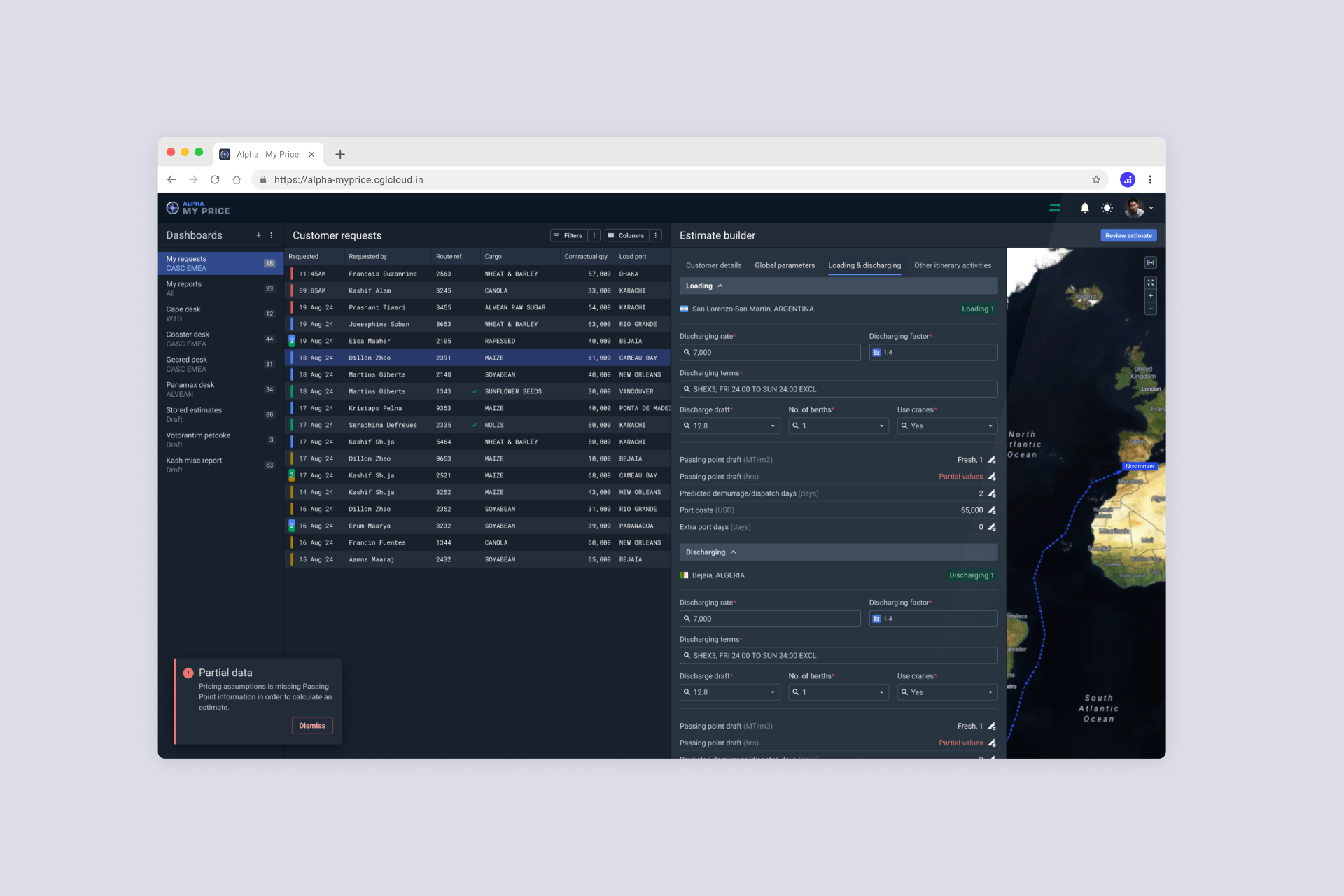
Implementing an interactive Mapbox route map in the estimate, visually depicting voyages for quick data assimilation.
Traders could explore locations, gaining insights into prices, margins, and variables like draft limitations and piracy costs. Combining numerical data with geographical context, enhanced decision-making and profitability assessments.


Screen Flows
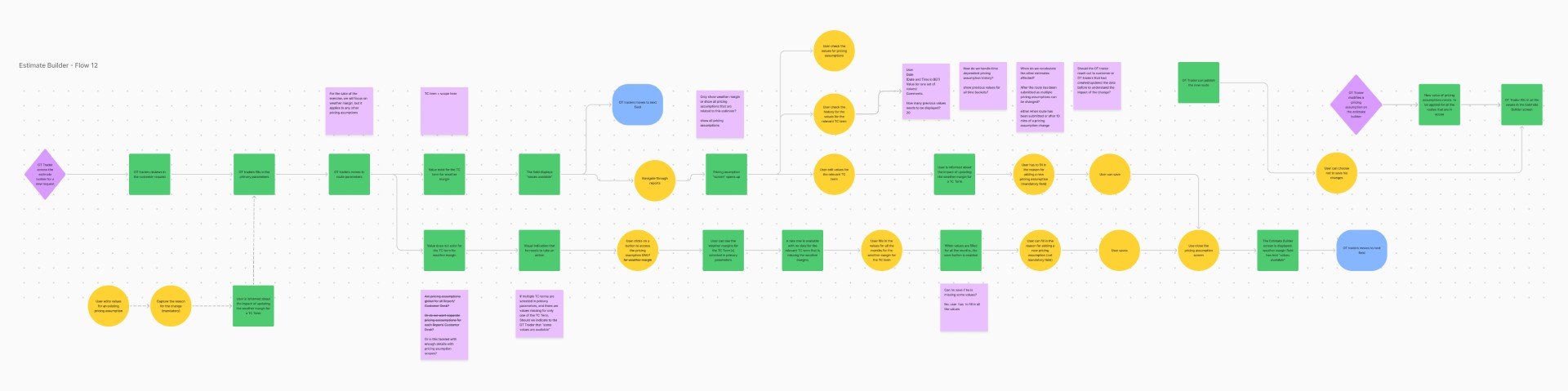
I created wireframe screen flows for the user journeys to map key interactions. These served as blueprints for app structure and functionality.
In line with Agile principles, wireframes were presented to the product team for rapid validation and iteration. This process refined UX, aligned stakeholders, identified issues early, and laid the groundwork for further design stages.
Patterns & Components
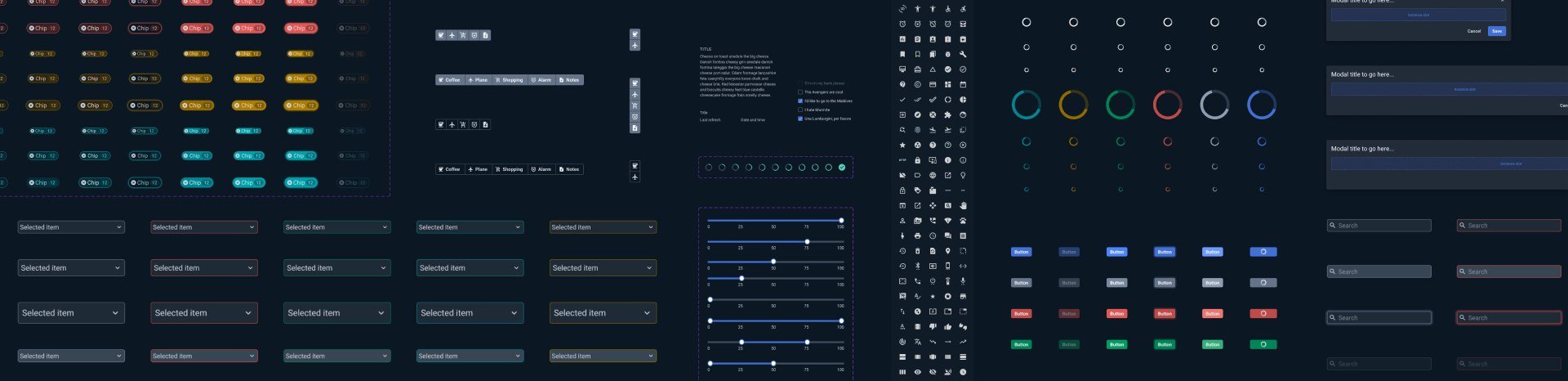
The project utilised the Alpha Design System's components and patterns, accelerating the design process.
Existing components were reused or adapted, with new ones created only when necessary. This approach maintained platform consistency while allowing for customisation.
Overcoming problems
The Price Capture system's fat finger validation feature tackled inaccurate inputs by flagging outliers for verification, with senior override capability.
This improved data reliability while balancing error prevention and market adaptability, reducing mistakes but allowing for valid exceptions.
XVA Charge Blotter
The Charge Blotter required surfacing CVA, indication, and official charge totals across thousands of trades while keeping override and approval actions auditable.
I designed the grid hierarchy and the adjacent detail panel so RMG status, exempt codes, and charge totals stayed visible without forcing users to drill into individual rows, and built the indication-charge edit and approval flow to keep override actions explicit and traceable.


GMAF Reporting Client Status
The needed to give relationship teams a fast read on client leverage and revenue performance across regions and business lines. I designed the dashboard's leverage, revenue, and ROA breakdowns alongside a detail grid that let users pivot between client level and period level views without re-querying and reducing the number of screens needed to answer a typical client review question.



Outcome
The capacity expansion let CIBC clear a backlog that had outpaced a single resource model, while keeping a consistent design language across four concurrent workstreams. NIA's prompt interaction and architecture shell gave the AI layer a structured, predictable interface rather than an open-ended chat bolted onto existing screens. Combined with the shared branding system extended that consistency across Nexus, XTrader, Pricer, and NIA itself.